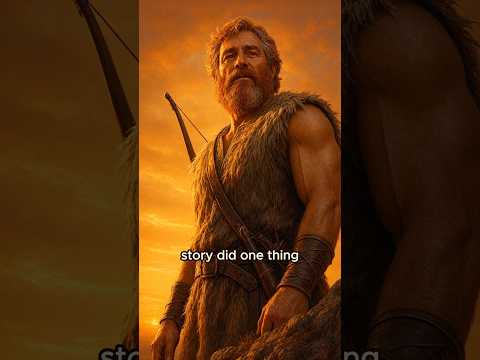
Some stories in the TorahSay it: TOH-rahThe Five Books of Moses, Genesis to Deuteronomy. It is the first and holiest part of the Hebrew Bible.Open the glossary take a single verse to tell, but cover a very long time. This is one of them. In just a few lines, twenty years go by. Isaac and Rebecca, a husband and wife, waited all that time for a baby. The Torah tells us Isaac loved Rebecca (Genesis 24:67). This is the story of that waiting, and of how they spent it.
Isaac was forty
This ParshaSay it: PAR-shahThe weekly Torah portion. The Torah is split into 54 parts, and one part is read aloud in synagogue each week, so the whole Torah is read every year.Open the glossary is called Toldot, which means “generations” or “family line.” It opens with Isaac, the son of Abraham and Sarah. The Torah tells us that Isaac was forty years old when he married Rebecca (Genesis 25:20).
Isaac and Rebecca were a family that God had made big promises to. Abraham had been told his children would become a great nation (Genesis 12:2). So everyone was waiting for the next child in the story.
But no child came.
A long, quiet wait
The Torah says Rebecca was barren. That is an old word that means she could not have children. Year after year, nothing changed.
Think about how long that is. If you are seven years old today, twenty years from now you would be twenty-seven. That is how long Isaac and Rebecca waited.
Two people, one prayer
Here is the verse that tells us what Isaac did:
וַיֶּעְתַּר יִצְחָק לַה׳ לְנֹכַח אִשְׁתּוֹ כִּי עֲקָרָה הִוא, וַיֵּעָתֶר לוֹ ה׳ וַתַּהַר רִבְקָה אִשְׁתּוֹ.Isaac prayed to God opposite his wife, because she could not have children. God answered his prayer, and Rebecca his wife became pregnant.
Two small words in this verse hold a whole story.
The first is the word for “prayed.” In Hebrew it is וַיֶּעְתַּר (vaye'tar). It is a strong word. RashiSay it: RAH-sheeRabbi Shlomo Yitzchaki (1040 to 1105), a teacher in France who wrote the most widely read explanation of the Torah, verse by verse.Open the glossary, the great teacher who explained the Torah verse by verse, says it means Isaac prayed a lot. He did not ask once and stop. He kept asking, again and again.
The second is the word “opposite,” לְנֹכַח (le-nochach). Isaac prayed opposite his wife. What does that mean? Rashi, drawing on an old teaching called a MidrashSay it: MID-rahshAncient teachings and stories from the early rabbis that explain the verses of the Bible and fill in what the text leaves out.Open the glossary, explains that Isaac stood in one corner of the room and prayed, and Rebecca stood in the other corner and prayed. They faced each other. They prayed for the same thing, at the same time, together.
The Midrash adds what each of them asked for (Bereshit RabbahSay it: beh-reh-SHEET RAH-bahAn early book of Midrash on the Book of Genesis ("Bereshit" is the Hebrew name of Genesis).Open the glossary 63:5). Isaac prayed that all of his children would come from this good and righteous woman. And Rebecca prayed that all of her children would come from this good and righteous man. Each one prayed for the other.
So the picture is not one lonely man asking for help. It is a husband and wife, looking across the room at each other, each one praying for the family they hoped to have.
Why did they have to wait?
This is the hardest question in the story, and The SagesThe early rabbis whose teachings are collected in the Talmud and Midrash.Open the glossary asked it too. Sarah waited a very long time for Isaac (Genesis 11:30). Now Rebecca waits for her children. Later, Rachel will wait as well (Genesis 29:31). Why did the first families of Israel have to wait so long?
The TalmudSay it: TAHL-moodA huge collection of discussions by the early rabbis about Jewish law, stories and ideas, written down around 1,500 years ago.Open the glossary gives an answer that surprises many people: God desires the prayers of the righteous, the people who try with all their hearts to do what is right (Yevamot 64a). The prayers themselves matter. The waiting was not empty time. It was full of talking to God.
The same page of the Talmud notices something about that strong word for prayer, עתר. It sounds like the Hebrew word for a pitchfork, the farm tool used to turn grain over. Just as a pitchfork turns the grain from one side to the other, the prayers of the righteous turn God from anger to mercy (Yevamot 64a). Another page of the Talmud teaches the same lesson (Sukkah 14a).
This does not mean that everyone who waits is being tested, or that waiting is easy. It means that in this story, the time Isaac and Rebecca spent waiting was not wasted. They spent it together, and they spent it praying.
The answer, and a new question
Finally, God answered. Rebecca became pregnant, and not with one baby but with two. But the pregnancy was very hard. The babies pushed and struggled inside her (Genesis 25:22).
Rebecca said something very honest: “If so, why am I here?” Rashi explains what she meant: “If the pain is this great, why did I long and pray to be pregnant?” (Rashi on Genesis 25:22, from Bereshit Rabbah 63:6).
Another Midrash says the babies were already different before they were born. When Rebecca walked past a place where people learned about God, one baby kicked to get out. When she walked past a place where people worshipped idols, the other baby kicked (Rashi on Genesis 25:22, from Bereshit Rabbah 63:6).
And what did Rebecca do with her hard question? The same thing she had done for twenty years. She went to ask God (Genesis 25:22). God told her that two nations were inside her, and that the older would serve the younger (Genesis 25:23).
Isaac was sixty
The twins were born. The first was red and hairy, and they named him Esau. The second came out holding on to his brother’s heel, and they named him Jacob. Then the Torah adds one small detail: Isaac was sixty years old when they were born (Genesis 25:26).
Forty when he married. Sixty when his sons were born. The Torah never says “twenty years” out loud. It lets us count for ourselves.
What this teaches us
Everyone waits for something. A child waits for a birthday. A family waits for good news. Some people wait for years for something they hope for with their whole heart.
Isaac and Rebecca teach us three simple things about waiting:
- Keep asking. Isaac did not pray once. He prayed again and again.
- Do not wait alone. Isaac and Rebecca prayed facing each other, for the same hope, together.
- The waiting is not wasted. The Sages teach that God desires the prayers of the righteous. The time in between was part of the story, not a gap in it.
When the answer came, it brought new questions too. Rebecca met those the same way: she went and asked. That is the lesson that lands at the end of these few verses. When you are waiting, turn toward the people you love, and keep talking to God.
Sources
Every teaching above comes from these texts. The Torah comes first, then the teachers who explain it. Each link opens the text in Hebrew and English on Sefaria, a free online library. How we choose and label sources.
TORAHThe text of the Five Books of Moses itself.
- Genesis 25:19 to 25:26 (opens Sefaria in a new tab)
The whole story told in this article.
- Genesis 11:30 (opens Sefaria in a new tab)
Sarah (then called Sarai) could not have children.
- Genesis 12:2 (opens Sefaria in a new tab)
God promises Abraham that his family will become a great nation.
- Genesis 24:67 (opens Sefaria in a new tab)
Isaac loved Rebecca (from the parsha before, Chayei Sarah).
- Genesis 25:20 (opens Sefaria in a new tab)
Isaac was forty years old when he married Rebecca.
- Genesis 25:21 (opens Sefaria in a new tab)
Isaac prays "opposite his wife" because she could not have children, and God answers.
- Genesis 25:22 to 25:23 (opens Sefaria in a new tab)
The twins struggle inside Rebecca. She asks why, and goes to ask God.
- Genesis 25:25 (opens Sefaria in a new tab)
The first twin is born red and hairy, and named Esau.
- Genesis 25:26 (opens Sefaria in a new tab)
Jacob is born holding Esau's heel. Isaac was sixty years old when the twins were born.
- Genesis 29:31 (opens Sefaria in a new tab)
Rachel could not have children (later, in parsha Vayetzei).
TALMUDThe great collection of the early rabbis’ teachings and discussions.
- Yevamot 64a (opens Sefaria in a new tab)
Rabbi Yitzchak asks why our forefathers could not have children at first, and answers: because God desires the prayers of the righteous. He also compares the prayers of the righteous to a pitchfork: just as a pitchfork turns the grain over, their prayers turn God from anger to mercy.
- Sukkah 14a (opens Sefaria in a new tab)
Rabbi Elazar teaches the same pitchfork lesson, from the word for Isaac's prayer in Genesis 25:21.
MIDRASHAncient rabbinic stories and teachings that explain the verses.
- Bereshit Rabbah 63:5 (opens Sefaria in a new tab)
Isaac and Rebecca prayed facing each other from opposite corners. Isaac asked that all his children come from this righteous woman, and she asked the same about him. This passage also links Isaac's prayer to a pitchfork that turns over the grain.
- Bereshit Rabbah 63:6 (opens Sefaria in a new tab)
Rebecca's question, "If so, why am I here?", means: if the pain is this great, why did I long and pray to be pregnant? Also the source of the teaching that the twins struggled when she passed places of learning and places of idol worship.
COMMENTARYClassic explanations of the verses by later scholars.
- Rashi on Genesis 25:21 (opens Sefaria in a new tab)
Explains Isaac's prayer as praying a great deal and urgently, and "opposite his wife" as each of them praying in their own corner of the room (from Bereshit Rabbah 63:5).
- Rashi on Genesis 25:22 (opens Sefaria in a new tab)
Explains Rebecca's question: if the pain of pregnancy is this great, why did I long and pray to be pregnant? Also tells how the babies moved when she passed places of learning and places of idol worship (from Bereshit Rabbah 63:6).